"For years I thought I had one money problem, not having enough. It turns out that problem had three partners I never agreed to work with, and all of them had been running parts of my life without my permission the entire time." I'm paraphrasing, but that is what a client said to me once and I've been using his quote ever since.
This week:
- I'll introduce you to the 5 Money-Based Emotions in the Mental Health System section.
- I'll break down the biggest challenge in the Money System section.
- In the Business System section I'll explain how these affect your daily operations.
I'm showing you this because once you can name each one, you can finally see which one is doing the real damage in your life and getting in the way of your retirement plans.
Mental Health System
Money is the number one cause of stress whether you have a little or a lot of it. But having a lot of it doesn't necessarily mean you feel like you have enough of it. There are layers to the stress you feel and like my client stated, they are like silent business partners making decisions for you personally and professionally. I built the Money-Based Emotions framework around this specific challenge. It puts the emotions into categories so you have more awareness and can determine what to do next.
The Money-Based Emotion categories are Fear-Based, Lack-Based, Lust-Based, Lonely-Based, and Mission-Based Emotions. You can have a full bank account and still carry money stress because the number was never the real or only source of your stress.
Your money stress comes from your fears of the unknown, the thought that the money could run out too soon, the feeling of just wanted more at all costs, and a big one my clients experience is feeling like people only love you for your money. The more you accummulate the thicker this layer becomes. The Mission-Based Emotions are more positive and fuel you rather than drain you. The passion you feel for your work is an example of a Mission-Based Money Emotion.
You have your layers, but you also listen to all your clients' layers. It has become part of the job, but what if it had its on spot on your menu of services? What if that talent you have for listening could alleviate some of your money stress? We'll talk more about this soon. For now, just understand that you have more than the one layer of money stress and that there's more to it than you may currently know.
Money System
So if you have layers of money stress and those layers are like business partners making money decisions, what problems does that create?
Several problems can arise but we will focus on the ones that affect your retirement planning. When you are stressed it affects your mood which then affects you physically. This could mean you're not in the position to take on as many clients as you need to reach your revenue numbers.
It could also mean that your stress makes you less pleasant and that affects the level of customer service you offer or the ability to go the extra mile for a client. This waters down the experience and leaves room for clients to look for other options. Client retention can go down, which goes back to revenue and then creates the feeling of not having enough. It's a cycle.
One more thing to consider is that if you aren't at your best during the service the likelihood that clients will refer their friends or write 5-star reviews is lower. This again affects revenue, because a client that isn't referred to you is a loss.
Last point and one I want you to really consider. Many barbers classify listening to the clients' problems as part of the service, like it's a towel or a cape. But it's not, it's more than an amenity, it's a service. Thinking of it as an add on that requires an upcharge. That one shift in thinking could change your Lack-Based Money Emotion to a Mission-Based Money Emotion.
I'll talk more about building a system that accounts for this in the Business System section below but also in the upcoming weeks. Make sure you're subscribed so you don't miss it. If you do miss anything, you can also book a Quick Call with me if you need me to do for you what you do for others, LISTEN AND GUIDE.
Business System
If money stress is affecting you emotionally and physically it is affecting your clients, which means it's affecting your business. If you aren't at your best neither is your business. Subconsciously you will not feel comfortable raising your prices or adding new services. This will feel like more stress and for that reason you'll likely put off doing it. This slows down your business growth, which delays your retirement.
In issue 9 we started the pricing conversation, and I want to keep building on it until you are fully comfortable making the move. If your prices have not kept pace with inflation or don't include what you need to fund your retirement, the fastest way to close that gap starts with updating your pricing. The second layer to this is adding to your menu. This is a step-by-step process that I will lay out here, but you can also book time with me if you want to fast track.
This month, start talking to your clients about retirement. Tell your clients what it looks like for you and ask them about their plan. Let them know you are building toward your own retirement, the same way they are, but you have to do it on your own. You don't have an employer match.
Try not to compare yourself to them, just listen. You'll find some have a clear answer and some do not. This exercise is more about connecting than comparing. Once they hear that you are thinking about this, they will likely understand the challenges you face. If not, the language I give you over the next few issues will help.
The good news is you have opened a conversation that reinforces why the future increase makes sense. A client who understands your reason for raising your prices is far more likely to stay and support it than one who is only feeling your money stress but can't put their finger on why they feel so heavy when they leave your chair.
Did You Know?
The red and white stripes on a barber pole have meaning. Barbers in medieval Europe doubled as surgeons, performing bloodletting, tooth extractions, and minor procedures alongside haircuts and shaves.
The red represented blood, the white represented the bandages, and the pole itself represented the stick patients gripped during bloodletting to help the veins in their arm stand out. The barbershop you run today descends from a profession that did the exact same thing that surgeons do today.
Do you know what they get paid?
From the Chair
Everything you need is here! One link, all the resources, click here!
While you're in the chair this week waiting on your next client, be sure...
- You're subscribed to the Prosperous Barber Journal. Click here
- You've shared this journal issue with a barber in your circle.
- Answer the questions and try the exercises above.
- Watch the current episode of the "What Keeps You Up at Night" podcast.
- Explore this week's Less Than 30 option. Each week we offer a session that takes less than 30 minutes and costs less than $30. You'll be pleasantly surprised, it's a major gift to you. Check it out!
Everything you need is here! One link, all the resources, click here!
This episode of the "What Keeps You Up at Night" podcast was a bit therapeutic for me. I thought it might help you too. It relates to striving for your best and how that negatively or positively affects relationships. Check it out and subscribe while you're there.
|
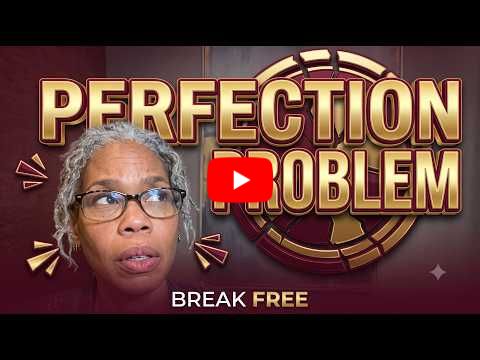
Subscribe to the channel so you never miss an episode.
If this issue made you think of someone, forward it. You probably know at least one barber who needs it. And if you aren't yet subscribed, make it official: prosperousbarber.com/journal
See you sooner. Love you muchly.
Kiné


Responses